Monday, March 18, 2013

Remembering a Negro WWII Battalion


I found these pictures in my father's memoirs. The U. S. Army was segregated until the early 1950's.  During WWII,  my father was an officer of one of the Negro battalions.

This first picture is of all the battalion leaders.  Back row, left to right:  1st Lt. Whittenberg, CWO Henry DeWitt, and, my father, CWO James Powell

Front row, left to right:  1st Lt. Gilbert J. Reiter, Major John S. Carpenter, Major Richard B. Peters, not named

These were my father's soldiers.  Back row, left to right: Alvin Simon, Arthur Price, N. A. Richardson, Bruce Chandler, Timothy Roberson, Marion Kay, Isiah Woodall, and William Coleman.

Front row, left to right: Saunders Carpenter, Isiah Boone, Fred E. Richardson, Chauncey Lyles, Rogers Johnson, Lorenza Larkins, Lloyd McKinney, William Scott, William Kersey, James Gibson, and Clarence Ware.

To these men, I thank you for your contributions in making this country great even when you could not take advantage of the opportunities you fought and died for.


Profile


Monday, February 18, 2013

The Greatness of Sameness


 I had the pleasure of seeing my grandchild this weekend.  Lexi is 7 going on 30 - very smart, sensitive, and loving.  There is not a time I don't learn from her.  One of our conversations included a story of  "mean girls" she encountered in school.  One of the 'popular' girls was giving her a hard time - one day she was nice to her, the next day mean.  Children with low self-esteem or who may suffer from belittling at home project their negative behavior onto others (they emulate what they see and hear). 

I played a game with my grandchild I wanted to share with you.  Use this same process to teach your child(ren) the greatness of "sameness".

My grandchild had given me several porcelain dolls for Christmas. We named each of the dolls.  She came up with the following scenario: Daisy (the largest doll) was sad because no one wanted to play with her.  She was much bigger than the rest.".  We "sat" the dolls down together and "made them focus on the things they had in common with Daisy".  Since being different could happen to anyone, I asked her to take the dolls and group them into as many common elements she could think of.  To add fun to the exercise, I gave her my camera.  She took pictures of the entire group first, followed with the breakout of each collection of "sameness".  Below are some of her responses to the exercise::


the group

on pedestals
  
blue dresses

blonde

brunette
 
white shoes

smallest ones
 
hats
Other collections included - dolls with black shoes, flowers on their dresses, bows in their hair, blue eyes, and brown eyes.  When we finished the conversation with the dolls, my grandchild felt better and was in the position to walk away without feeling sad, knowing mean girls are the ones with the problem.  It is hard for children to understand why others are mean.  Allowing her to create the scenario, use the dolls as players in the scene, and letting her come up with the conversation between the dolls helped her to figure out what she would say and do the next time the mean girl approached her.

Your son's conversation may focus on cars or trucks.

Focusing on the positive characteristics of people helps children appreciate sameness even when each of us are unique!

Thursday, October 4, 2012

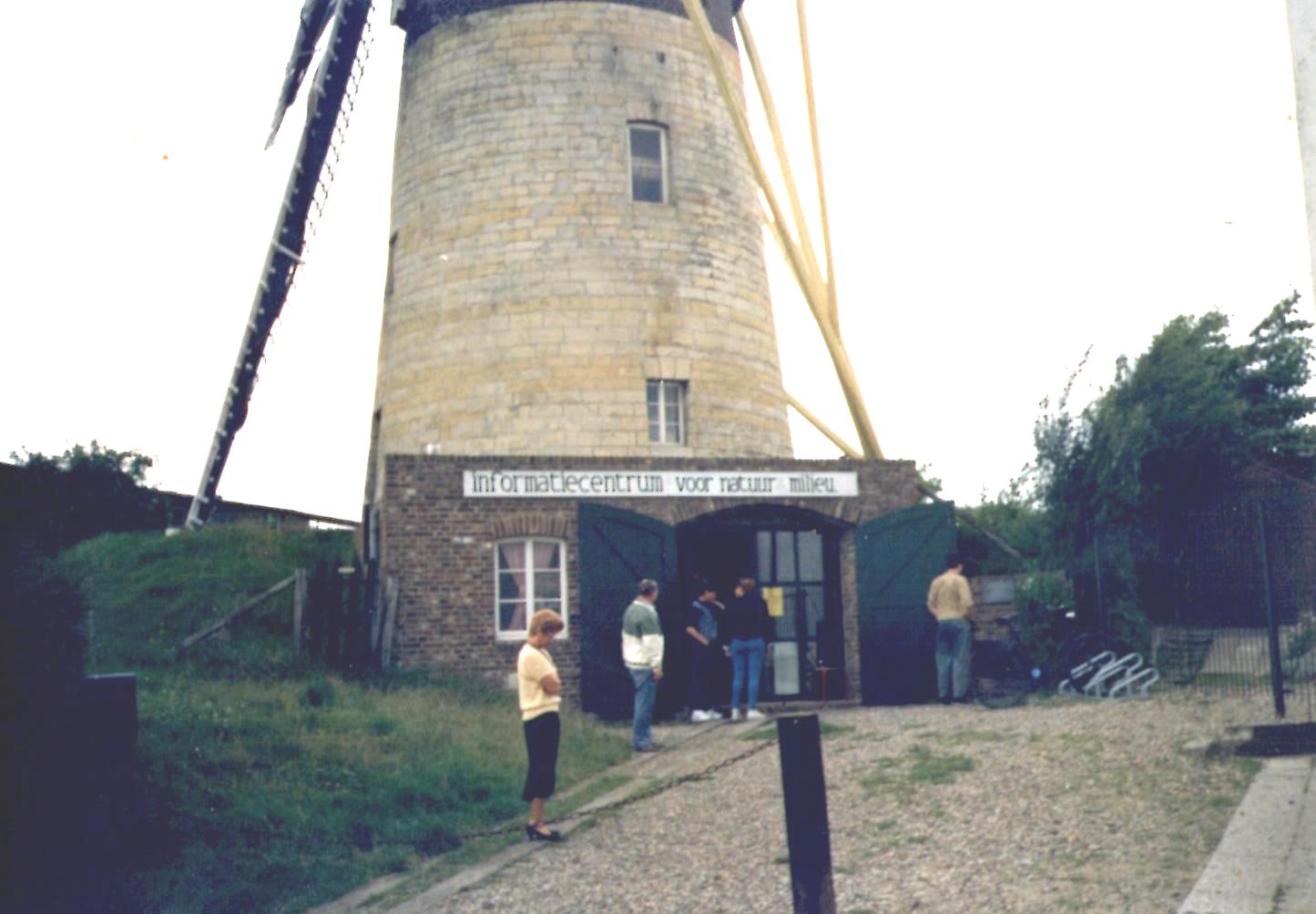
Summers Spent in a Dutch Windmill


I grew up in France.  My father was an American soldier in the U. S. army; my mother, born in Holland and a former professor of art and music at the Sorbonne in Paris.  We lived in Metz, France, a part of the (western) Strasbourg region.  For my yearly summer vacations my parents would drive the 4 hours to my aunt’s (mom's sister) house, in Bemelen, Holland. They would spend several hours reuniting with family and would drive back home to Metz in the evening.


My aunt and uncle owned a dairy farm.  They also had chickens and pigs.  The best part of the farm was a (real Dutch) windmill that stored the food for the animals.  It was always fun during the day to go inside and play.  I would spend the day with my uncle and older cousins driving the tractor, feeding the animals, and waiting for my cousins to come back from school (the French and Dutch kids only have one month vacation, we Americans have 3).   At the end of the summer, my parents would pick me up and I would be back in Metz just in time for school to start.  The American and French kids always thought I was so lucky and I did too.

One summer I arrived and the windmill had been remodeled from a storage place for animal food to a 2-story apartment!  I was too young to sleep there by myself at night but during the day I would go in the living room to nap, read books or write letters to my parents back in Metz. (This was the 1960’s – we had no cell phones or internet.  Telephones were only used for local calls. Long distance calls were very expensive.)  My father was transferred to the US in 1964.  I missed those vacations in Holland with my family.
  
In 1970 my husband, also a soldier in the US Army, was transferred to Germany.  My mother came to visit and we drove up to Bemelen for the day to reunite with the family.  My son was born in Frankfurt.  When we returned to the US in 1975 he was 2 years old so it was not a place he remembered. On his 16th birthday, I took him back to Europe. We visited family and friends in France and then headed to Bemelen.

 The Dutch government had nationalized (taken over) all windmills. When my cousins took us to the home I remembered, we saw the windmill was now a museum.  The curator knew my cousins and he was happy to let us tour the two story windmill.  Fond memories for me and a real treat for my son.  How many children can say their mom slept and played in a real Dutch windmill!

My hope is that one day he will take my granddaughter to Bemelen and show her where her grandmother spent her summers.
                              
Hartelijk Dank (thank you so much) Ana Van Lousberg for the color pictures you provided me.  We must be kindred spirits – my (aunt's) family’s last name is Lousberg.

Thursday, September 13, 2012

Teaching Children Time Management Techniques


School has started.  The mornings of sleeping in and nights of staying up are over.  The adjustment can be difficult the first weeks.  School starts the last week of August. No sooner do they start getting used to the "school schedule"  again, they have a three day weekend (Labor Day).  We have to begin all over.

Here are some tips for both you and the children to ease the stress levels that come with the return to school and teaches them life-long skills (in italics).

The night before:

1.  Homework.  Teach them to do their homework as soon as they finish their snack.  Memories are fresh and they are still in school mode. It gives you time to check it and for them to make necessary corrections.  Once finished, they will feel a sense of accomplishment and can then transfer to “play” mode.  It helps them understand the importance of completing this task.  It helps them make better decisions.  Remember to have them put the homework into their backpacks.  No running around looking for it or forgetting in the morning. (organization skills)


2.  Prepare next day's lunch.  Mornings can be so harried; you wind up throwing food together in a hurry.  Have them (help you) make their lunch.  It gives the opportunity to prepare healthier lunches and gives quality time for you to be together.  This will give you both extra minutes in the morning.


3.  Select / prepare their clothes:  Prepare or have the children pick out what they are going to wear the next day.  Have them watch the 5 or 6 o’clock weather forecast.  This gives them the information they need for their picks.  Clothes, shoes, accessories for girls (bows, earrings).  It  teaches them life-long learning planning skills.


4Iron clothes.  It takes time to set up the board, plug in the iron, wait for it to heat up, iron, unplug iron, pick up iron and board.  These 10 - 15 minutes are extra minutes you will gain in the morning. (scheduling skills)


5Sleep.  Too many kids are falling asleep in the classroom.  They are tired!  It is critical they get at least 8 hours sleep.  They are up early, they have a long day of learning, so make sure that 9 pm is sleep time (adjust depending on age).  Start at 8:45.  Have them take their bath, brush their teeth, go to the bathroom, read them a story, and then it's light's out.

Now, you have your time to do whatever it is you want or need to do and you know that tomorrow morning should be calm for both you and your children.  (stress management)

Wednesday, August 15, 2012